Creating a Unified SuperApp Experience for UMMAH
Creating a Unified SuperApp Experience for UMMAH
Industry
IslamicTech
Industry
IslamicTech
Industry
IslamicTech
Durations
3 Months
Durations
3 Months
Durations
3 Months
Role
UI/UX Designer & Consultant
Role
UI/UX Designer & Consultant
Role
UI/UX Designer & Consultant
Background
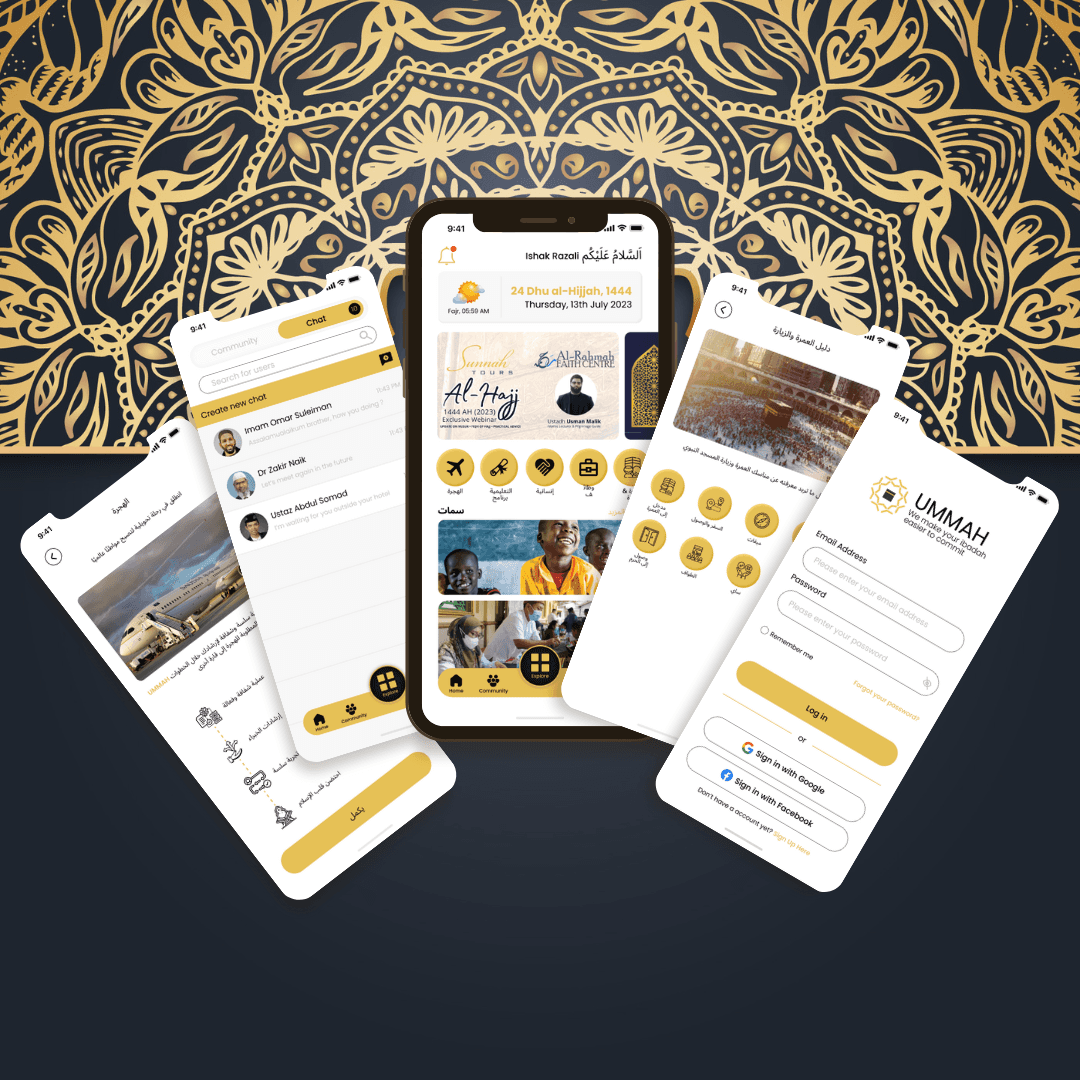
In response to the growing need for an all-in-one digital platform that supports the everyday lifestyle and spiritual needs of the Muslim community, we initiated the UMMAH SuperApp — a comprehensive mobile application that brings together religious guidance, community services, and digital tools in one unified ecosystem.
Background
In response to the growing need for an all-in-one digital platform that supports the everyday lifestyle and spiritual needs of the Muslim community, we initiated the UMMAH SuperApp — a comprehensive mobile application that brings together religious guidance, community services, and digital tools in one unified ecosystem.
Background
In response to the growing need for an all-in-one digital platform that supports the everyday lifestyle and spiritual needs of the Muslim community, we initiated the UMMAH SuperApp — a comprehensive mobile application that brings together religious guidance, community services, and digital tools in one unified ecosystem.
Core problem
Despite the growing number of digital platforms catering to various aspects of Muslim life—such as Hajj preparation, donations, job searches, and Islamic education—there is currently no unified platform that brings all these services together in a seamless, user-friendly experience.
Muslim users are often forced to juggle multiple apps or platforms for their daily spiritual, financial, and community needs. This leads to:
Fragmented user experience across different services
Inconsistent UI/UX, especially for older or less tech-savvy users
Wasted time switching between platforms for simple tasks
Trust issues around secure donations and Islamic compliance
Lack of personalisation for regional or community-specific content
Core problem
Despite the growing number of digital platforms catering to various aspects of Muslim life—such as Hajj preparation, donations, job searches, and Islamic education—there is currently no unified platform that brings all these services together in a seamless, user-friendly experience.
Muslim users are often forced to juggle multiple apps or platforms for their daily spiritual, financial, and community needs. This leads to:
Fragmented user experience across different services
Inconsistent UI/UX, especially for older or less tech-savvy users
Wasted time switching between platforms for simple tasks
Trust issues around secure donations and Islamic compliance
Lack of personalisation for regional or community-specific content
Core problem
Despite the growing number of digital platforms catering to various aspects of Muslim life—such as Hajj preparation, donations, job searches, and Islamic education—there is currently no unified platform that brings all these services together in a seamless, user-friendly experience.
Muslim users are often forced to juggle multiple apps or platforms for their daily spiritual, financial, and community needs. This leads to:
Fragmented user experience across different services
Inconsistent UI/UX, especially for older or less tech-savvy users
Wasted time switching between platforms for simple tasks
Trust issues around secure donations and Islamic compliance
Lack of personalisation for regional or community-specific content
Approach for UMMAH SuperApp
To unify fragmented services and enhance the digital experience for the Muslim community, we adopted a user-centred design approach focused on simplicity, cultural relevance, and mobile-first accessibility. Our goal was to create an all-in-one platform that streamlines spiritual, financial, and community services—ensuring ease of use, trust, and meaningful engagement across diverse user groups.
Approach for UMMAH SuperApp
To unify fragmented services and enhance the digital experience for the Muslim community, we adopted a user-centred design approach focused on simplicity, cultural relevance, and mobile-first accessibility. Our goal was to create an all-in-one platform that streamlines spiritual, financial, and community services—ensuring ease of use, trust, and meaningful engagement across diverse user groups.
Approach for UMMAH SuperApp
To unify fragmented services and enhance the digital experience for the Muslim community, we adopted a user-centred design approach focused on simplicity, cultural relevance, and mobile-first accessibility. Our goal was to create an all-in-one platform that streamlines spiritual, financial, and community services—ensuring ease of use, trust, and meaningful engagement across diverse user groups.
Design Process
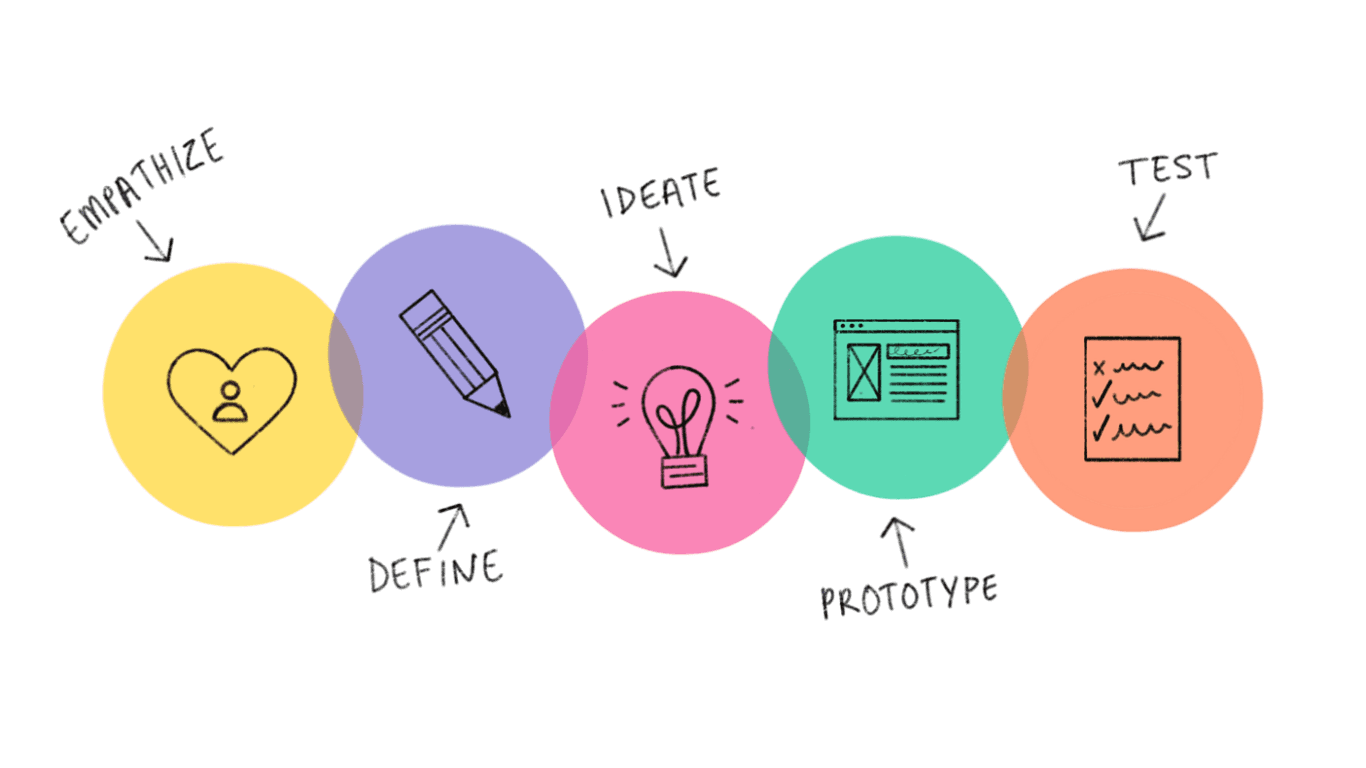
To begin the process, I applied the Design Thinking approach to gain deeper insights into user pain points and gather comprehensive data to inform the design decisions.
Design Process
To begin the process, I applied the Design Thinking approach to gain deeper insights into user pain points and gather comprehensive data to inform the design decisions.
Design Process
To begin the process, I applied the Design Thinking approach to gain deeper insights into user pain points and gather comprehensive data to inform the design decisions.
Steps Taken
User Research & Pain Point Analysis
Conducted interviews and surveys with diverse Muslim user segments
Identified fragmented service access, lack of trust, and inconsistent app experiences
Problem Definition
Synthesised research findings into core problem statements
Mapped user journeys to highlight friction points in spiritual and community services
Ideation & Feature Planning
Brainstormed solutions and feature sets aligned with user needs
Prioritised features like Hajj preparation, donation flow, job search, and spiritual tracking
UI Design System
Created a culturally sensitive and modern design system
Applied consistent visual styles, iconography, and typography for brand coherence
Navigation Structure
Redesigned the information architecture for intuitive access
Implemented role-based bottom navigation and simplified menu flows
Prototype Development
Developed interactive wireframes for key features and flows
Presented high-fidelity prototypes for stakeholder and user feedback
Usability Testing
Conducted usability tests with real users from different age groups
Refined flows and layouts based on feedback and usage behavior
Steps Taken
User Research & Pain Point Analysis
Conducted interviews and surveys with diverse Muslim user segments
Identified fragmented service access, lack of trust, and inconsistent app experiences
Problem Definition
Synthesised research findings into core problem statements
Mapped user journeys to highlight friction points in spiritual and community services
Ideation & Feature Planning
Brainstormed solutions and feature sets aligned with user needs
Prioritised features like Hajj preparation, donation flow, job search, and spiritual tracking
UI Design System
Created a culturally sensitive and modern design system
Applied consistent visual styles, iconography, and typography for brand coherence
Navigation Structure
Redesigned the information architecture for intuitive access
Implemented role-based bottom navigation and simplified menu flows
Prototype Development
Developed interactive wireframes for key features and flows
Presented high-fidelity prototypes for stakeholder and user feedback
Usability Testing
Conducted usability tests with real users from different age groups
Refined flows and layouts based on feedback and usage behavior
Steps Taken
User Research & Pain Point Analysis
Conducted interviews and surveys with diverse Muslim user segments
Identified fragmented service access, lack of trust, and inconsistent app experiences
Problem Definition
Synthesised research findings into core problem statements
Mapped user journeys to highlight friction points in spiritual and community services
Ideation & Feature Planning
Brainstormed solutions and feature sets aligned with user needs
Prioritised features like Hajj preparation, donation flow, job search, and spiritual tracking
UI Design System
Created a culturally sensitive and modern design system
Applied consistent visual styles, iconography, and typography for brand coherence
Navigation Structure
Redesigned the information architecture for intuitive access
Implemented role-based bottom navigation and simplified menu flows
Prototype Development
Developed interactive wireframes for key features and flows
Presented high-fidelity prototypes for stakeholder and user feedback
Usability Testing
Conducted usability tests with real users from different age groups
Refined flows and layouts based on feedback and usage behavior
Wireframes
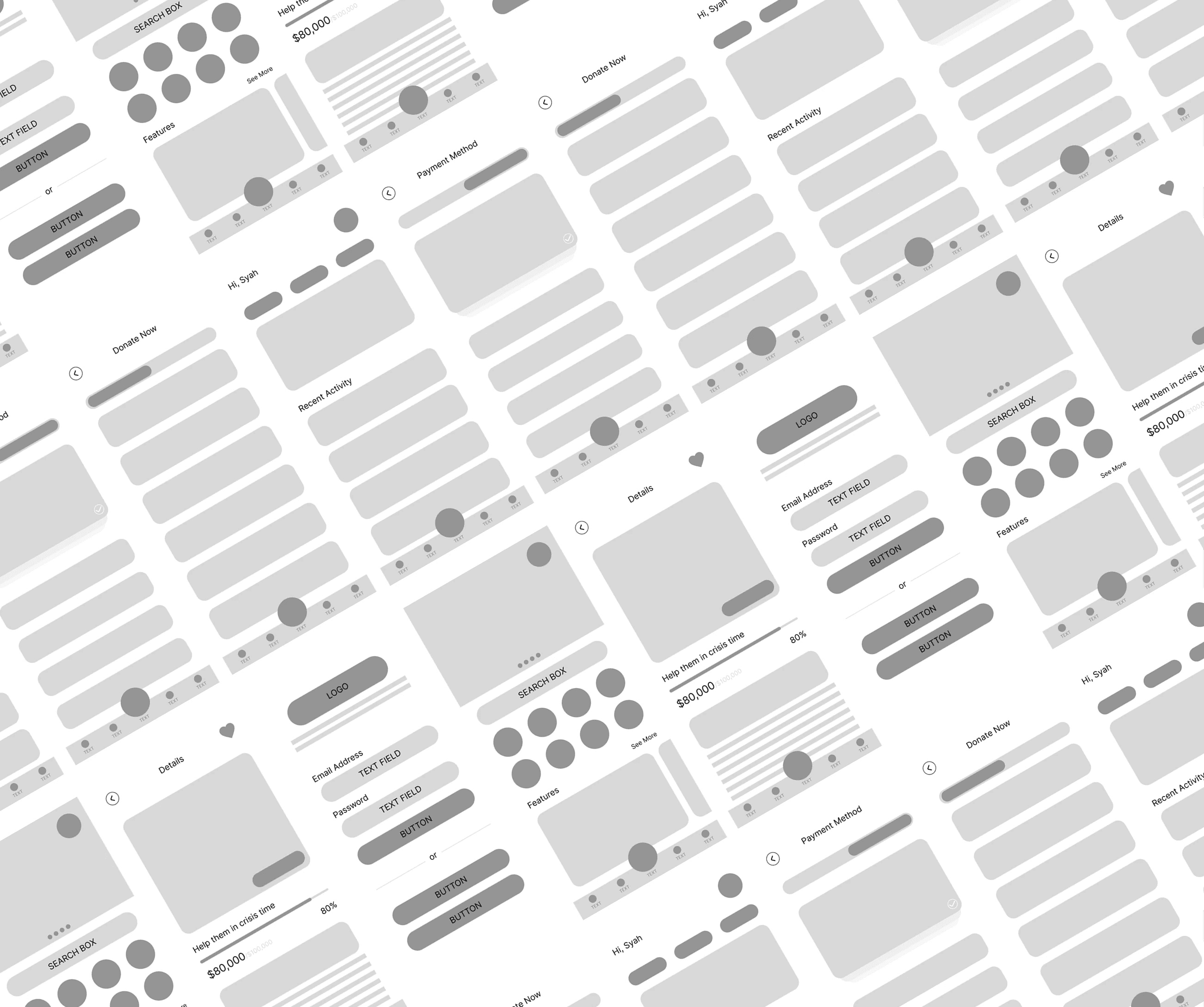
These are the low-fidelity wireframe concepts for the Ummah SuperApp, approved by the client and developed through a user-centred design process. The concepts were shaped by in-depth research and analysis of the current digital ecosystem serving Muslim communities, with a clear focus on streamlining usability, simplifying navigation, and building a unified experience.
Key findings from user research revealed the following pain points:
Disconnected Digital Experience
Users were forced to switch between multiple platforms to access different Islamic services, leading to a disjointed and inefficient experience.Inconsistent and Non-Intuitive Interfaces
The lack of a unified design system made navigation confusing, especially for older or less tech-savvy users who require a more guided and accessible interface.Inefficient Task Completion
Simple tasks such as making a donation or finding Hajj resources required unnecessary steps, resulting in wasted time and user frustration.Concerns Around Trust and Security
Users expressed hesitation around the legitimacy and security of donation platforms, emphasising the need for transparency and Islamic compliance.Limited Localisation and Personal Relevance
Current solutions did not cater to regional needs or offer community-specific content, creating a lack of emotional and cultural connection with users.
These challenges directly informed the structure and flow of the wireframes. The design aims to consolidate core services into a single, accessible platform while addressing trust, usability, and personalisation—laying a strong foundation for high-fidelity design and iterative testing.
Wireframes
These are the low-fidelity wireframe concepts for the Ummah SuperApp, approved by the client and developed through a user-centred design process. The concepts were shaped by in-depth research and analysis of the current digital ecosystem serving Muslim communities, with a clear focus on streamlining usability, simplifying navigation, and building a unified experience.
Key findings from user research revealed the following pain points:
Disconnected Digital Experience
Users were forced to switch between multiple platforms to access different Islamic services, leading to a disjointed and inefficient experience.Inconsistent and Non-Intuitive Interfaces
The lack of a unified design system made navigation confusing, especially for older or less tech-savvy users who require a more guided and accessible interface.Inefficient Task Completion
Simple tasks such as making a donation or finding Hajj resources required unnecessary steps, resulting in wasted time and user frustration.Concerns Around Trust and Security
Users expressed hesitation around the legitimacy and security of donation platforms, emphasising the need for transparency and Islamic compliance.Limited Localisation and Personal Relevance
Current solutions did not cater to regional needs or offer community-specific content, creating a lack of emotional and cultural connection with users.
These challenges directly informed the structure and flow of the wireframes. The design aims to consolidate core services into a single, accessible platform while addressing trust, usability, and personalisation—laying a strong foundation for high-fidelity design and iterative testing.
Wireframes
These are the low-fidelity wireframe concepts for the Ummah SuperApp, approved by the client and developed through a user-centred design process. The concepts were shaped by in-depth research and analysis of the current digital ecosystem serving Muslim communities, with a clear focus on streamlining usability, simplifying navigation, and building a unified experience.
Key findings from user research revealed the following pain points:
Disconnected Digital Experience
Users were forced to switch between multiple platforms to access different Islamic services, leading to a disjointed and inefficient experience.Inconsistent and Non-Intuitive Interfaces
The lack of a unified design system made navigation confusing, especially for older or less tech-savvy users who require a more guided and accessible interface.Inefficient Task Completion
Simple tasks such as making a donation or finding Hajj resources required unnecessary steps, resulting in wasted time and user frustration.Concerns Around Trust and Security
Users expressed hesitation around the legitimacy and security of donation platforms, emphasising the need for transparency and Islamic compliance.Limited Localisation and Personal Relevance
Current solutions did not cater to regional needs or offer community-specific content, creating a lack of emotional and cultural connection with users.
These challenges directly informed the structure and flow of the wireframes. The design aims to consolidate core services into a single, accessible platform while addressing trust, usability, and personalisation—laying a strong foundation for high-fidelity design and iterative testing.
Hi-Fi Design Concept
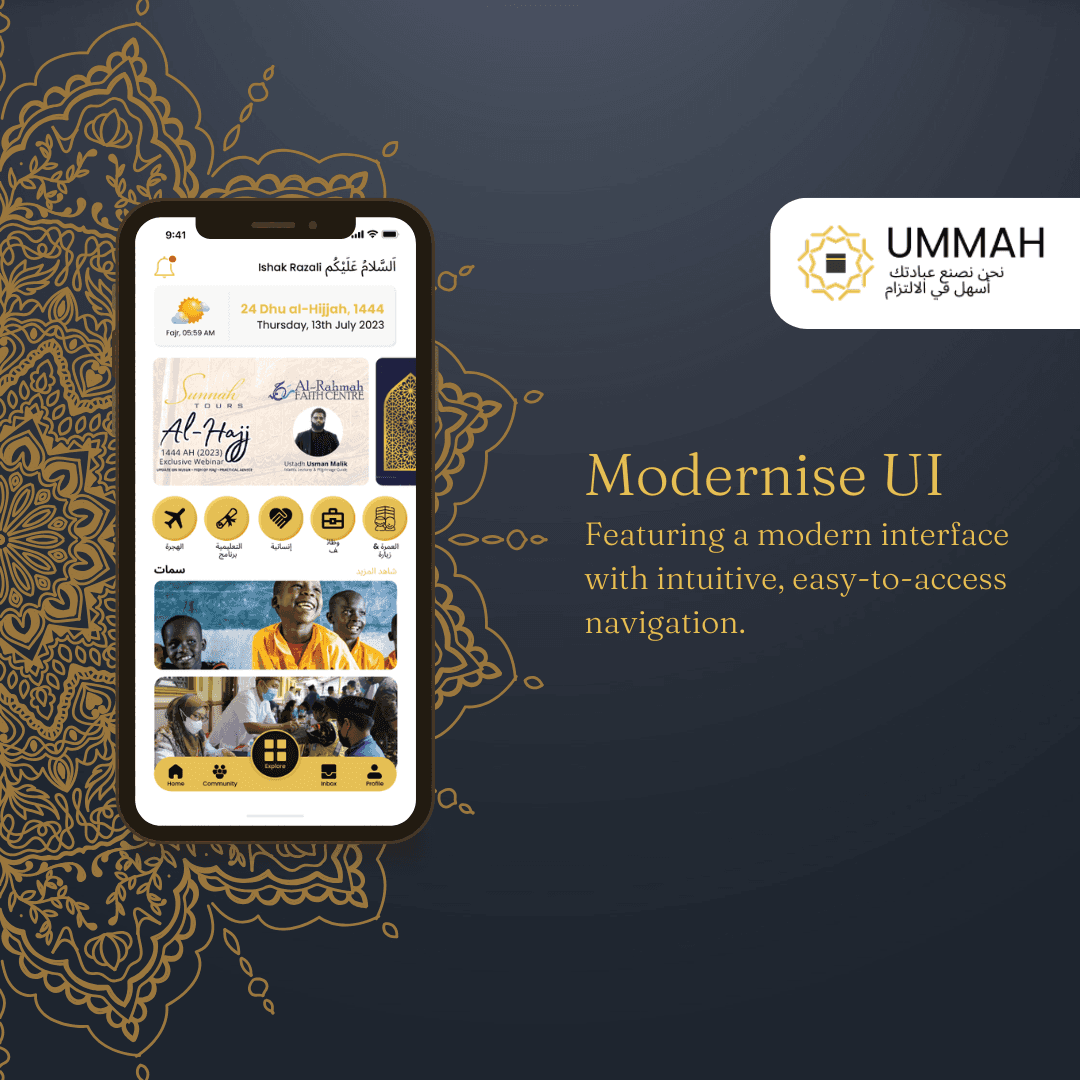
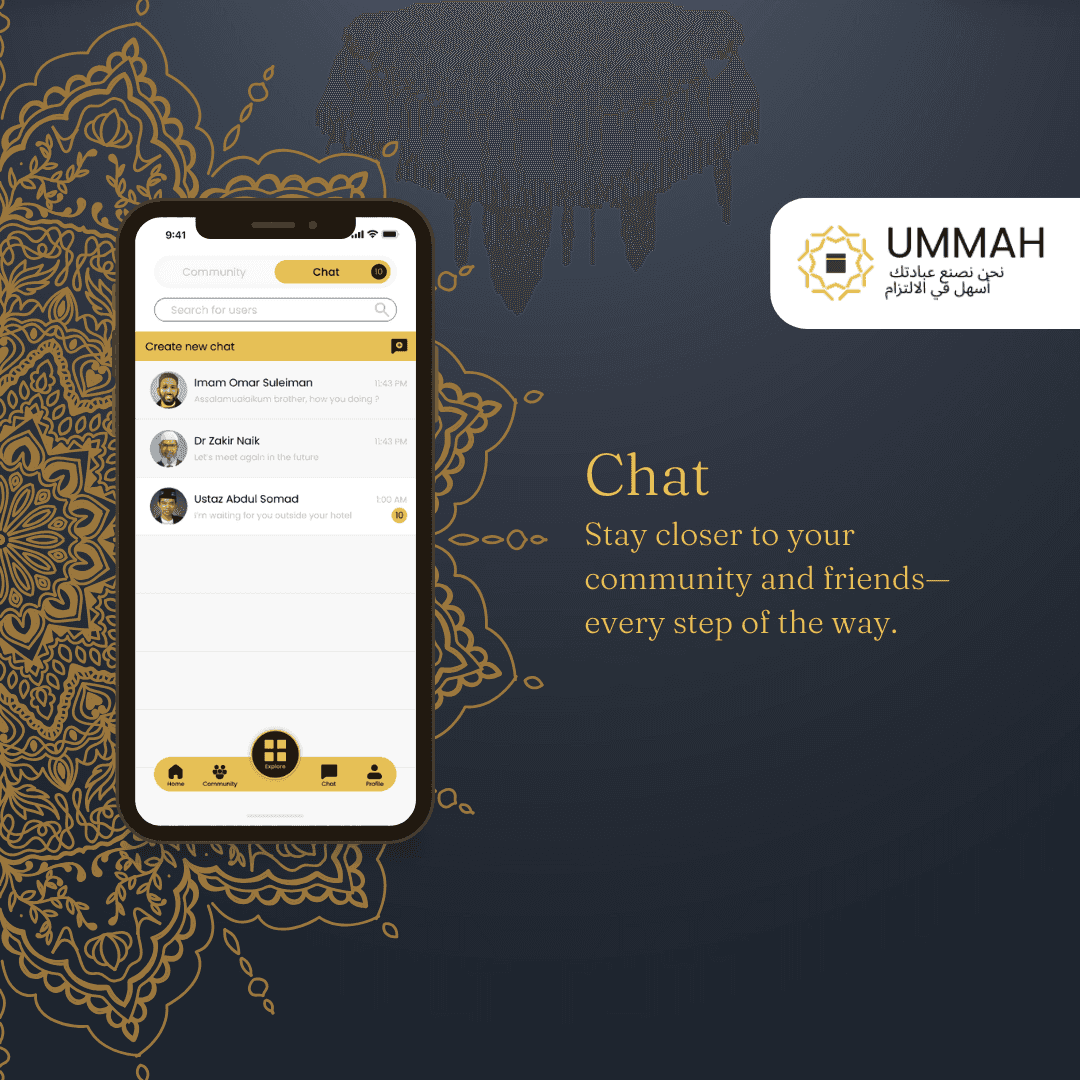
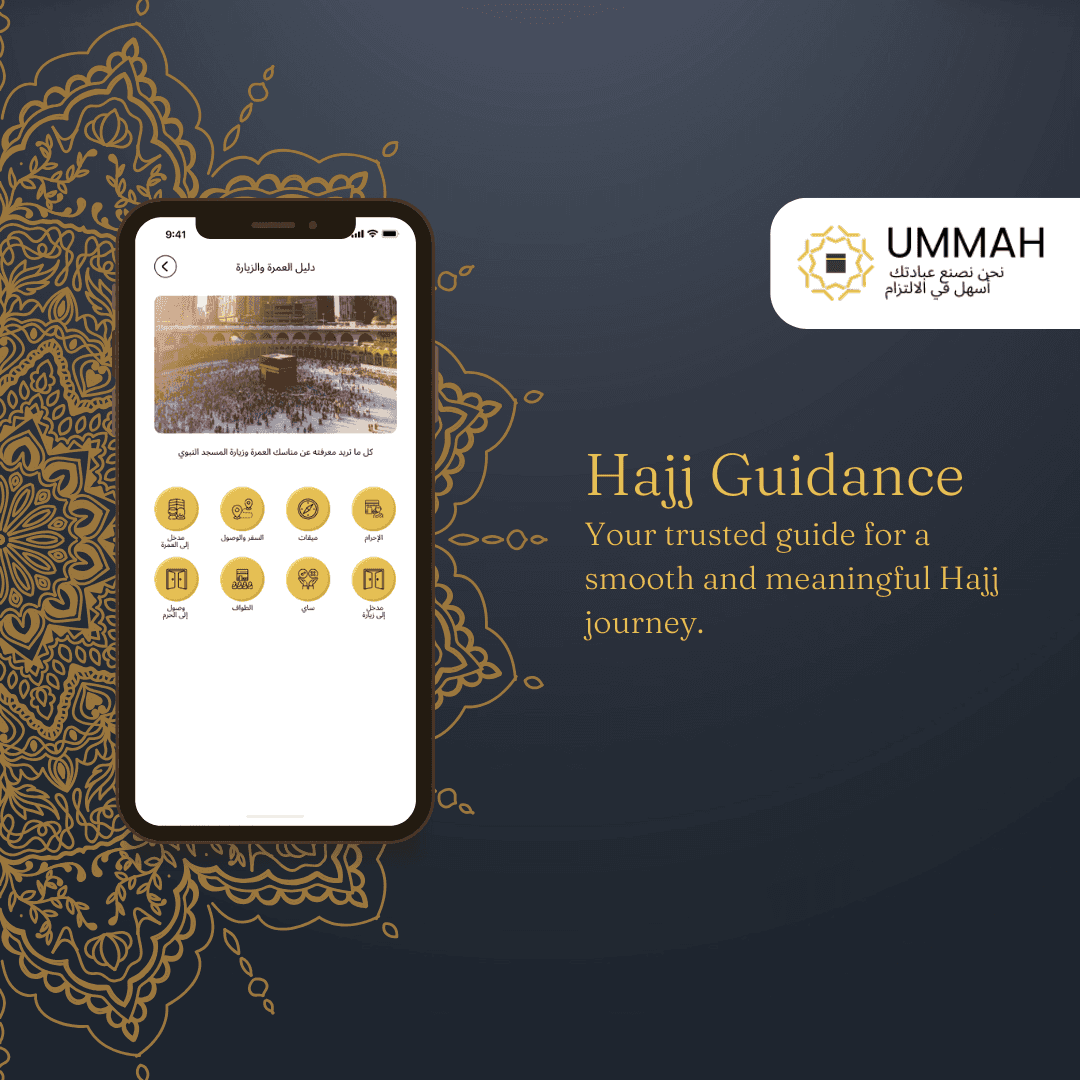
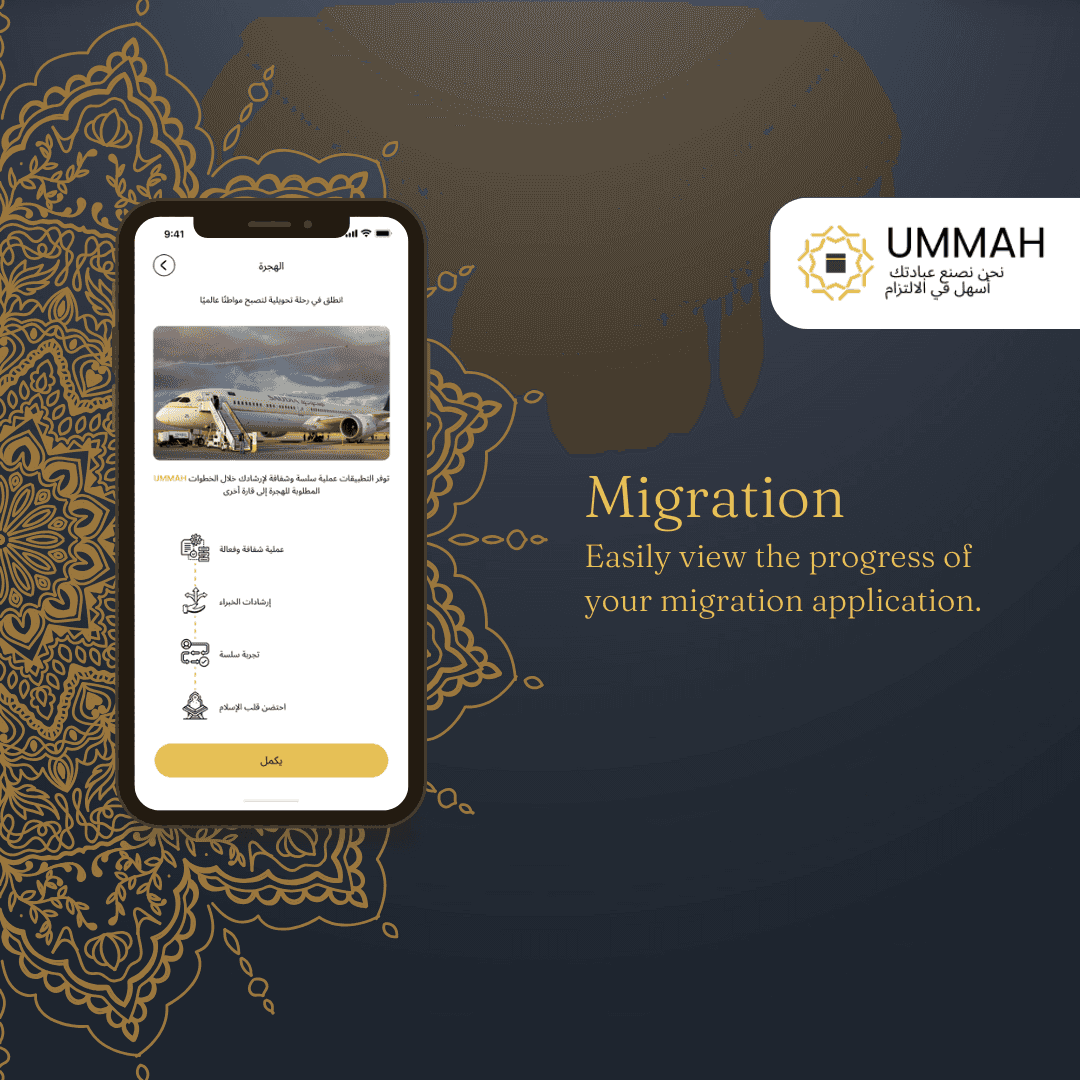
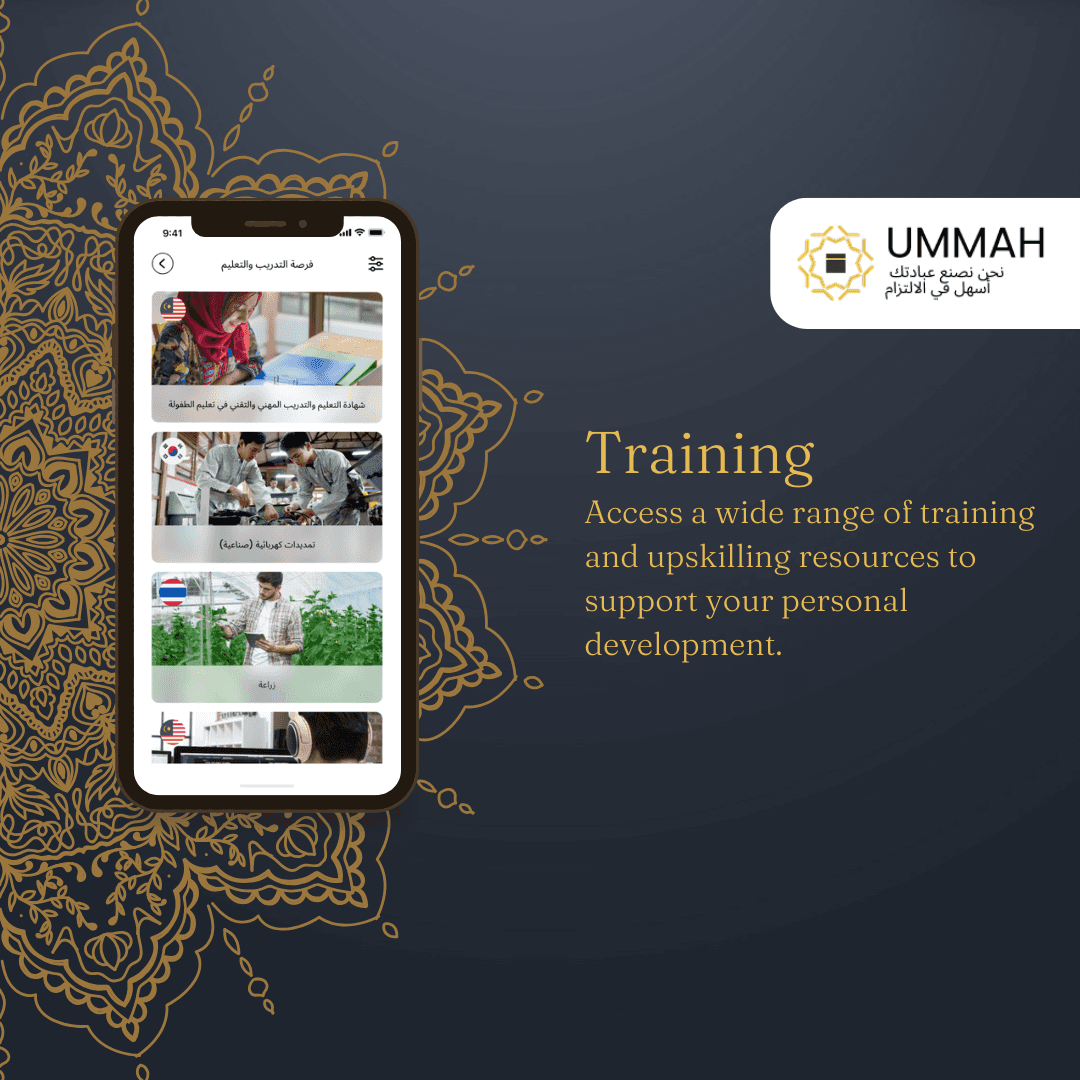
These pages showcase the key improvements made in response to earlier user feedback and the approved wireframes. They reflect significant enhancements in usability, navigation flow, and visual consistency—each directly aligned with the pain points uncovered during user research.
Every screen has been thoughtfully refined to deliver a more intuitive experience, with optimised layouts and clearer content hierarchy. The final designs are now complete and ready for handoff to the development team for implementation.
Hi-Fi Design Concept
These pages showcase the key improvements made in response to earlier user feedback and the approved wireframes. They reflect significant enhancements in usability, navigation flow, and visual consistency—each directly aligned with the pain points uncovered during user research.
Every screen has been thoughtfully refined to deliver a more intuitive experience, with optimised layouts and clearer content hierarchy. The final designs are now complete and ready for handoff to the development team for implementation.
Hi-Fi Design Concept
These pages showcase the key improvements made in response to earlier user feedback and the approved wireframes. They reflect significant enhancements in usability, navigation flow, and visual consistency—each directly aligned with the pain points uncovered during user research.
Every screen has been thoughtfully refined to deliver a more intuitive experience, with optimised layouts and clearer content hierarchy. The final designs are now complete and ready for handoff to the development team for implementation.
Results and Impact
Centralised Access to Essential Services
The app successfully unifies various Islamic services—such as Hajj preparation, donation drives, job listings, migration status checks, and personal development resources—into one cohesive platform, eliminating the need for users to navigate multiple disconnected apps.Improved Digital Inclusivity
With a mobile-first and user-friendly design, the app makes digital Islamic services more accessible to a wider audience, including the elderly and those with limited tech literacy. This fosters a sense of belonging and inclusion in an increasingly digital world.Streamlined Religious and Community Engagement
By simplifying tasks like checking Hajj guidelines, donating to verified causes, or participating in local events, the app empowers users to practice their faith and contribute to their communities more easily and consistently.Increased Trust and Transparency
Incorporating Islamic-compliant frameworks and clear, transparent donation systems helps build user trust—encouraging more frequent and confident participation in charitable giving and community initiatives.Localised and Culturally Relevant Experience
With support for regional content and language preferences, the app delivers a personalised experience that resonates with different communities across Malaysia and beyond, reinforcing cultural and religious identity in meaningful ways.Empowerment Through Knowledge and Skills
Through accessible training resources and upskilling opportunities, the platform supports continuous learning and personal development within the Muslim community, enabling growth both spiritually and professionally.
Results and Impact
Centralised Access to Essential Services
The app successfully unifies various Islamic services—such as Hajj preparation, donation drives, job listings, migration status checks, and personal development resources—into one cohesive platform, eliminating the need for users to navigate multiple disconnected apps.Improved Digital Inclusivity
With a mobile-first and user-friendly design, the app makes digital Islamic services more accessible to a wider audience, including the elderly and those with limited tech literacy. This fosters a sense of belonging and inclusion in an increasingly digital world.Streamlined Religious and Community Engagement
By simplifying tasks like checking Hajj guidelines, donating to verified causes, or participating in local events, the app empowers users to practice their faith and contribute to their communities more easily and consistently.Increased Trust and Transparency
Incorporating Islamic-compliant frameworks and clear, transparent donation systems helps build user trust—encouraging more frequent and confident participation in charitable giving and community initiatives.Localised and Culturally Relevant Experience
With support for regional content and language preferences, the app delivers a personalised experience that resonates with different communities across Malaysia and beyond, reinforcing cultural and religious identity in meaningful ways.Empowerment Through Knowledge and Skills
Through accessible training resources and upskilling opportunities, the platform supports continuous learning and personal development within the Muslim community, enabling growth both spiritually and professionally.
Results and Impact
Centralised Access to Essential Services
The app successfully unifies various Islamic services—such as Hajj preparation, donation drives, job listings, migration status checks, and personal development resources—into one cohesive platform, eliminating the need for users to navigate multiple disconnected apps.Improved Digital Inclusivity
With a mobile-first and user-friendly design, the app makes digital Islamic services more accessible to a wider audience, including the elderly and those with limited tech literacy. This fosters a sense of belonging and inclusion in an increasingly digital world.Streamlined Religious and Community Engagement
By simplifying tasks like checking Hajj guidelines, donating to verified causes, or participating in local events, the app empowers users to practice their faith and contribute to their communities more easily and consistently.Increased Trust and Transparency
Incorporating Islamic-compliant frameworks and clear, transparent donation systems helps build user trust—encouraging more frequent and confident participation in charitable giving and community initiatives.Localised and Culturally Relevant Experience
With support for regional content and language preferences, the app delivers a personalised experience that resonates with different communities across Malaysia and beyond, reinforcing cultural and religious identity in meaningful ways.Empowerment Through Knowledge and Skills
Through accessible training resources and upskilling opportunities, the platform supports continuous learning and personal development within the Muslim community, enabling growth both spiritually and professionally.
Key Improvements
Unified Multi-Service Platform
Previously scattered services are now brought together in a single SuperApp—covering Hajj guidance, donations, jobs, migration status, events, and more.Simplified and Intuitive Navigation
A reorganised information architecture and clean navigation system make it easier for users to find what they need without confusion or backtracking.Consistent and Modern UI Design
A refreshed, culturally sensitive visual design system improves user trust and engagement, while maintaining Islamic aesthetics and simplicity.Streamlined User Flows
Key user journeys like donating, viewing Hajj checklists, or checking job listings were redesigned to reduce steps and eliminate friction.Enhanced Trust & Compliance Features
Secure, transparent donation mechanisms with clear labelling for Islamic-compliant initiatives build user confidence and credibility.Localisation & Personalisation
Support for multilingual content and region-specific features ensures the app remains relevant across diverse communities and cultural contexts.Inclusive Design for All Age Groups
Larger touch areas, simplified interfaces, and onboarding aids make the app more approachable for elderly or less tech-savvy users.Modular & Scalable Structure
Built with scalability in mind, the app architecture allows future additions (e.g., e-commerce, health services, education tools) without compromising performance or usability.
Key Improvements
Unified Multi-Service Platform
Previously scattered services are now brought together in a single SuperApp—covering Hajj guidance, donations, jobs, migration status, events, and more.Simplified and Intuitive Navigation
A reorganised information architecture and clean navigation system make it easier for users to find what they need without confusion or backtracking.Consistent and Modern UI Design
A refreshed, culturally sensitive visual design system improves user trust and engagement, while maintaining Islamic aesthetics and simplicity.Streamlined User Flows
Key user journeys like donating, viewing Hajj checklists, or checking job listings were redesigned to reduce steps and eliminate friction.Enhanced Trust & Compliance Features
Secure, transparent donation mechanisms with clear labelling for Islamic-compliant initiatives build user confidence and credibility.Localisation & Personalisation
Support for multilingual content and region-specific features ensures the app remains relevant across diverse communities and cultural contexts.Inclusive Design for All Age Groups
Larger touch areas, simplified interfaces, and onboarding aids make the app more approachable for elderly or less tech-savvy users.Modular & Scalable Structure
Built with scalability in mind, the app architecture allows future additions (e.g., e-commerce, health services, education tools) without compromising performance or usability.
Key Improvements
Unified Multi-Service Platform
Previously scattered services are now brought together in a single SuperApp—covering Hajj guidance, donations, jobs, migration status, events, and more.Simplified and Intuitive Navigation
A reorganised information architecture and clean navigation system make it easier for users to find what they need without confusion or backtracking.Consistent and Modern UI Design
A refreshed, culturally sensitive visual design system improves user trust and engagement, while maintaining Islamic aesthetics and simplicity.Streamlined User Flows
Key user journeys like donating, viewing Hajj checklists, or checking job listings were redesigned to reduce steps and eliminate friction.Enhanced Trust & Compliance Features
Secure, transparent donation mechanisms with clear labelling for Islamic-compliant initiatives build user confidence and credibility.Localisation & Personalisation
Support for multilingual content and region-specific features ensures the app remains relevant across diverse communities and cultural contexts.Inclusive Design for All Age Groups
Larger touch areas, simplified interfaces, and onboarding aids make the app more approachable for elderly or less tech-savvy users.Modular & Scalable Structure
Built with scalability in mind, the app architecture allows future additions (e.g., e-commerce, health services, education tools) without compromising performance or usability.
Key Outcomes
The following key outcomes highlight the significant improvements made in response to earlier user feedback and the approved wireframes. These outcomes reflect substantial enhancements in usability, trust-building, digital inclusivity, and service integration—each addressing the core pain points identified during user research.
Increased User Retention and Engagement
By unifying essential services into one platform, users are more likely to stay engaged, as they no longer need to switch between different apps for spiritual, financial, and community needs.
Intuitive navigation, culturally sensitive design, and personalised content ensure users feel valued and connected, leading to longer app usage and repeat visits.
Enhanced Trust in Islamic Services
Transparent and secure donation systems, along with clear Islamic compliance labels, foster user trust, especially in charitable giving.
Users gain confidence in the app’s reliability for managing personal, financial, and spiritual matters in line with their values.
Broader Inclusivity and Accessibility
The mobile-first design, inclusive features (such as larger touch areas and simplified interfaces), and multilingual support make the app more accessible to a wider demographic, including elderly users and those with limited tech knowledge.
The app’s culturally relevant experience fosters a sense of community and belonging, particularly in diverse global contexts.
Streamlined User Journeys
Key user flows, such as checking Hajj guidelines, donating to verified causes, and browsing job listings, are simplified, minimising the time and effort required to complete these tasks.
The app’s intuitive design reduces user frustration, improving overall satisfaction and ease of use.
Stronger Community Engagement
By facilitating the easy tracking of Hajj preparations, encouraging donations to trusted causes, and providing access to local events, UMMAH SuperApp strengthens users' connection to their faith and communities.
It empowers users to actively participate in religious and community activities with minimal effort.
Localised and Personalised Experience
Tailoring content to regional and cultural preferences ensures that users from different countries or backgrounds feel the app is made for their specific needs.
Language options and location-based features create a sense of relevance and enhance the user experience for diverse communities.
Scalability and Future Growth
The app’s modular architecture allows for future expansion into additional services, such as e-commerce, health, or education tools, without compromising performance.
The adaptability ensures the app remains relevant as new needs emerge in the Muslim community, ensuring long-term sustainability.
Empowerment Through Knowledge and Personal Development
Providing users with resources for spiritual growth and professional development empowers them to improve both their personal and career lives.
Continuous access to learning tools, job listings, and upskilling opportunities fosters a sense of empowerment and progress.
Each of these outcomes represents a significant improvement in the UMMAH SuperApp’s design, addressing the key challenges identified during user research and testing. The final designs are now complete and ready for handoff to the development team for implementation.
Key Outcomes
The following key outcomes highlight the significant improvements made in response to earlier user feedback and the approved wireframes. These outcomes reflect substantial enhancements in usability, trust-building, digital inclusivity, and service integration—each addressing the core pain points identified during user research.
Increased User Retention and Engagement
By unifying essential services into one platform, users are more likely to stay engaged, as they no longer need to switch between different apps for spiritual, financial, and community needs.
Intuitive navigation, culturally sensitive design, and personalised content ensure users feel valued and connected, leading to longer app usage and repeat visits.
Enhanced Trust in Islamic Services
Transparent and secure donation systems, along with clear Islamic compliance labels, foster user trust, especially in charitable giving.
Users gain confidence in the app’s reliability for managing personal, financial, and spiritual matters in line with their values.
Broader Inclusivity and Accessibility
The mobile-first design, inclusive features (such as larger touch areas and simplified interfaces), and multilingual support make the app more accessible to a wider demographic, including elderly users and those with limited tech knowledge.
The app’s culturally relevant experience fosters a sense of community and belonging, particularly in diverse global contexts.
Streamlined User Journeys
Key user flows, such as checking Hajj guidelines, donating to verified causes, and browsing job listings, are simplified, minimising the time and effort required to complete these tasks.
The app’s intuitive design reduces user frustration, improving overall satisfaction and ease of use.
Stronger Community Engagement
By facilitating the easy tracking of Hajj preparations, encouraging donations to trusted causes, and providing access to local events, UMMAH SuperApp strengthens users' connection to their faith and communities.
It empowers users to actively participate in religious and community activities with minimal effort.
Localised and Personalised Experience
Tailoring content to regional and cultural preferences ensures that users from different countries or backgrounds feel the app is made for their specific needs.
Language options and location-based features create a sense of relevance and enhance the user experience for diverse communities.
Scalability and Future Growth
The app’s modular architecture allows for future expansion into additional services, such as e-commerce, health, or education tools, without compromising performance.
The adaptability ensures the app remains relevant as new needs emerge in the Muslim community, ensuring long-term sustainability.
Empowerment Through Knowledge and Personal Development
Providing users with resources for spiritual growth and professional development empowers them to improve both their personal and career lives.
Continuous access to learning tools, job listings, and upskilling opportunities fosters a sense of empowerment and progress.
Each of these outcomes represents a significant improvement in the UMMAH SuperApp’s design, addressing the key challenges identified during user research and testing. The final designs are now complete and ready for handoff to the development team for implementation.
Key Outcomes
The following key outcomes highlight the significant improvements made in response to earlier user feedback and the approved wireframes. These outcomes reflect substantial enhancements in usability, trust-building, digital inclusivity, and service integration—each addressing the core pain points identified during user research.
Increased User Retention and Engagement
By unifying essential services into one platform, users are more likely to stay engaged, as they no longer need to switch between different apps for spiritual, financial, and community needs.
Intuitive navigation, culturally sensitive design, and personalised content ensure users feel valued and connected, leading to longer app usage and repeat visits.
Enhanced Trust in Islamic Services
Transparent and secure donation systems, along with clear Islamic compliance labels, foster user trust, especially in charitable giving.
Users gain confidence in the app’s reliability for managing personal, financial, and spiritual matters in line with their values.
Broader Inclusivity and Accessibility
The mobile-first design, inclusive features (such as larger touch areas and simplified interfaces), and multilingual support make the app more accessible to a wider demographic, including elderly users and those with limited tech knowledge.
The app’s culturally relevant experience fosters a sense of community and belonging, particularly in diverse global contexts.
Streamlined User Journeys
Key user flows, such as checking Hajj guidelines, donating to verified causes, and browsing job listings, are simplified, minimising the time and effort required to complete these tasks.
The app’s intuitive design reduces user frustration, improving overall satisfaction and ease of use.
Stronger Community Engagement
By facilitating the easy tracking of Hajj preparations, encouraging donations to trusted causes, and providing access to local events, UMMAH SuperApp strengthens users' connection to their faith and communities.
It empowers users to actively participate in religious and community activities with minimal effort.
Localised and Personalised Experience
Tailoring content to regional and cultural preferences ensures that users from different countries or backgrounds feel the app is made for their specific needs.
Language options and location-based features create a sense of relevance and enhance the user experience for diverse communities.
Scalability and Future Growth
The app’s modular architecture allows for future expansion into additional services, such as e-commerce, health, or education tools, without compromising performance.
The adaptability ensures the app remains relevant as new needs emerge in the Muslim community, ensuring long-term sustainability.
Empowerment Through Knowledge and Personal Development
Providing users with resources for spiritual growth and professional development empowers them to improve both their personal and career lives.
Continuous access to learning tools, job listings, and upskilling opportunities fosters a sense of empowerment and progress.
Each of these outcomes represents a significant improvement in the UMMAH SuperApp’s design, addressing the key challenges identified during user research and testing. The final designs are now complete and ready for handoff to the development team for implementation.